The Story of Jesus’ Birth

Prophecy

Therefore the Lord himself will give you a sign: The virgin will conceive and give birth to a son, and will call him Immanuel. – Isaiah 7:14

But you, Bethlehem Ephrathah, though you are small among the clans of Judah, out of you will come for me one who will be ruler over Israel, whose origins are from of old, from ancient times. – Micah 5:2

For to us a child is born, to us a son is given; and the government shall be upon his shoulder, and his name shall be called Wonderful Counselor, Mighty God, Everlasting Father, Prince of Peace.  Of the increase of his government and of peace there will be no end, on the throne of David and over his kingdom, to establish it and to uphold it with justice and with righteousness from this time forth and forevermore. The zeal of the Lord of hosts will do this. – Isaiah 9:6-7

Immaculate Conception

This is how Jesus the Messiah was born.  The angel Gabriel was sent from God to the city of Nazareth in Galilee, to a young girl named Mary.  Mary was 14 or 15, engaged to a man named Joseph, who was a descendant of King David. Gabriel came to her and said, “Greetings, O favored one, the Lord is with you!” But she was greatly troubled when she heard this, and tried to understand what the angel meant. The angel said to her, “Do not be afraid, Mary, for you have found favor with God.  You will conceive and give birth to a son, and you shall name him Jesus. He will be great and will be called the Son of the Most High. The Lord God will give to him the throne of his father David, and he will reign over Israel forever, and of his kingdom there will be no end.”

Mary said to the angel, “How will this be, since I am not married?”

The angel answered her, “The Holy Spirit will come upon you, and the power of the Most High will overshadow you; therefore the child to be born will be called holy—the Son of God. Look even your cousin Elizabeth in her old age is six months pregnant and is going to have a son. Many people thought that she would never have a child, but nothing is impossible with God.”

Mary said, “Behold, I am the servant of the Lord; let it be to me according to what you have said.” And Gabriel left her.

And the Word became flesh and dwelt among us, and we have seen his glory, glory as of the only Son from the Father, full of grace and truth. For from his fullness we have all received, grace upon grace.  For the law was given through Moses; grace and truth came through Jesus Christ. No one has ever seen God; the only God, who is at the Father’s side, he has made him. — John 1:14

Jesus Birth (Incarnation)

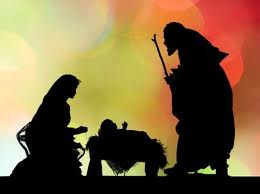
The Roman Emperor Caesar Augustus ordered that a census should be taken of the Empire and all should be counted.  Everyone went to be registered, each to his own ancestral hometown. Joseph went up from the town of Nazareth in Galilee to Bethlehem, the city of David, in Judea, because he was a descendant of David.  He went to be registered with Mary, his fiancée, who was pregnant. While they were there, the time came for her baby to be born.  She gave birth to a son, her firstborn child, and wrapped him in a cloth and laid him in a manger, because there was no room for them in the inn.

Nearby there were shepherds out in the field, keeping watch over their flock by night. Suddenly an angel of the Lord appeared to them, and the glory of the Lord shone around them.  They were terrified, but the angel said to them, “Do not be afraid for I bring you good news of great joy that will be for all the people. For unto you is born this day in the city of David a Savior, who is Christ the Lord. And this will be a sign for you: you will find a baby wrapped in a cloth and lying in a manger.” Suddenly the angel was joined by a multitude of other praising God and saying, “Glory to God in the highest, and on earth peace among those with whom he is pleased!”

When the angels left and returned to heaven, the shepherds said to each other, “Let’s go to Bethlehem and see this thing that has happened, which the Lord has made known to us.” They hurried to the village and found Mary and Joseph, and the baby lying in a manger. When they saw him, they told Mary and Joseph what the angel had said about the baby. All who heard the story were in awe of what the shepherds told them. Mary treasured up all these things, thinking about them often. The shepherds returned to their flocks of sheep, glorifying and praising God for all they had heard and seen because it was as the angel had told them.

After Jesus’ Birth

Now after Jesus was born in Bethlehem of Judea in the days of King Herod, wise men from the east came to Jerusalem, asking, “Where is he who has been born king of the Jews? For we saw his star when it rose and have come to worship him.” When Herod heard this, he was troubled, and all Jerusalem with him; and calling together all the chief priests and scribes of the people, he asked them where the Christ was to be born. They told him, “In Bethlehem of Judea, for so it is written by the prophet: “‘You, O Bethlehem, in the land of Judah, are by no means least among the rulers of Judah; for from you shall come a ruler who will shepherd my people Israel.’”

Then Herod summoned the wise men secretly and questioned them about what time the star had appeared. And he sent them to Bethlehem, saying, “Go and search diligently for the child, and when you have found him, tell me where he is, that I too may come and worship him.” After listening to the king, they went on their way. The star that they had seen when it rose went before them until it came to rest over the place where the child was. When they saw the star, they rejoiced exceedingly with great joy. And going into the house they saw the child with Mary his mother, and they fell down and worshiped him. Then, opening their treasures, they offered him gifts of gold and frankincense and myrrh. And being warned in a dream not to return to Herod, they returned home to their own country by another route.

Now after they left an angel of the Lord appeared to Joseph in a dream and said, “Rise, take the child and his mother, and flee to Egypt, and stay there until I tell you, for Herod is about to search for the child, to kill him.” He rose and took Jesus and Mary by night and left for Egypt and remained there until Herod died. This was to fulfill what the Lord had spoken by the prophet, “Out of Egypt I called my son.”

Why is this story so special?  Jesus did not come as just another in the line of God’s prophets, but as the final prophet, who was God made man.  Jesus, who is uncreated and eternal, became a man to do what we couldn’t do…fulfill the Law perfectly as required by God.  He came as God-man to save people by taking the just punishment for the Law they broke as a substitute for them.  The punishment He endured was an unjust death on a Roman cross nearly 2000 years ago.  But He did not stay dead.  Jesus rose from the grave after three days and appeared to hundreds of people.  Jesus doesn’t ask us to do the impossible, that is to keep the Law perfectly, but instead to throw ourselves at His feet confessing our sin and trusting in Him as our Mediator for forgiveness before a great, holy and just God who hates sin.  Jesus is God’s love made manifest and the solution to our guilt before God that we can’t remove ourselves.  We are to follow His example of sacrificial love by loving God with our heart, soul, mind and strength and loving others as we love ourselves.

(All scripture is from the ESV primarily based on Matthew 2 and Luke 1-2 with some minor edits to blend and modernize)

Learn more about the first Christmas day.

Posted in Holidays | Tagged , , , , , , | Leave a comment

Youth Discipleship Podcast Ideas

Discipling youth is challenging. With the constant distraction of flashing screens, their attention spans are short and desire to engage in conversations about God limited. The time you have with them in a car commuting to and from activities can be valuable if you use it wisely. Though not necessarily designed for youth the following resources can be helpful in sparking conversations about God, His world and His people:

  • Five Minutes in Church History with Stephen Nichols. This is a quick look into key events in church history and is the right length for young attention spans
  • Open Book with Stephen Nichols. Another short podcast that might be better for high school students. It dives into the favorite books of prominent pastors and theologians
  • Sports Spectrum: As implied this is sports specific for the athletes in your family. It has interviews of men and women across a variety of amateur and professional teams. Also take a look at this baseball discipleship post for other ideas
  • Pray the Word: A quick commentary and prayer from David Platt
  • The World and Everything in It: Daily news podcast from a Christian perspective that are appropriate for all ages and can prompt dialogue about world events and how God is working through them
  • John Piper’s biography sermons: Once again, more at the high school level and much longer than the other resources listed above, but good lessons so we can stand on the shoulders of giants of the faith
Posted in Discipleship, Family | Leave a comment

How Long O Lord?

Have you ever lived in or visited a foreign country where everything you encounter is different from what you experience at home?  The language, the food, the customs are all unfamiliar, making even the most simple tasks difficult.   You may not know, what you’re buying because the labels are indiscernible or struggled to describe your destination to an Uber driver.  Some customs such as television standards (pornography), laws (anti-religious conversion) and business practices (bribes) may be repulsive when they’re initially encountered.  Eventually, if you stay in the country long enough, it’s easy to accept the new standards and overlook them because they’re so common or part of everyday life.  You live in a new normal because the country has become your home away from home.

This can often be true in our Christian life as well.  At conversion, we become foreigners and aliens, pilgrims and sojourners (Hebrews 11:13, 1 Peter 1:17, 2:11) regardless of our nationality because our ultimate home is in heaven (Philippians 3:20).  We learn the standards of our new home, but live in day-to-day life in a foreign land creating tension between God’s commands and our culture’s reality. Many of us, especially in middle class America, we’ve too easily accepted our earthly home and become comfortable.  We become satisfied and complacent as we seek earthly rewards by from climbing the corporate ladder or getting our child into the perfect college. We daydream about our next vacation, get consumed by Christmas shopping and eagerly await the latest and greatest cell phone model.  Likewise, injustice is something we acknowledge, but don’t act on because the problems are too big for us to have any impact.  With the worldly culture and its standards, it’s easy to end up losing a clear vision of our true home because it seems so distant from us.

In the 2020 U.S., rarely do we groan with the earth (Romans 8:22) because of our corruption and cry out, “How long, O Lord?” as we struggle. We don’t look forward to our next life because we’re comfortable with this one, which reminds us of Jesus’ warning that it’s easier for a camel to go through the eye of a needle than for the rich to enter heaven.  We, the rich of both the current time and world history, have no urgency, no pressing need to seek first the kingdom or cry out to be saved from our oppression.  Our resources are often too great and control too strong to need God to make it through the day. We don’t struggle with Paul’s tension when he said, “I’d rather be with the Lord…” (Philippians 1:23)

This challenge isn’t true for much of the world. As a a Christian in North Korea, pastor in China or new convert in Saudi Arabia, your perspective would be much different. They’re calling out daily, hourly “How long, O Lord?” (Psalm 13:1) and long constantly for Jesus’ return to heal the broken world and bring our true home in heaven. This isn’t true for most of history as our forbearers struggled daily to provide for their family or avoid sickness.

The past year of a global pandemic has brought the brokenness of the world easily visible with fear of the virus, loss of jobs, racial tension and riots from Minnesota to Washington DC. They should serve as daily reminders to call out “How long, O Lord?” that our individual and collective sin might be brought to justice and we restored to our true home at peace with God through Christ. (Romans 5:1-11)

Note: written in 2021, but published in 2023

Posted in Culture, Discipleship | Tagged , , | Leave a comment

If God Is…

If He (God) is good, and infinitely good, there is all the reason in the world that you should love Him; and there is no show of reason that you should love the world or sin before him.

If He is faithful and true, His threatening must be feared, and His promises must not be distrusted; and there is no reason that you should make any question of His word. 

If He is holy…then He must be an enemy to sin, and to all that are unholy, because they are contrary to His nature. 

Consider that He is almighty, and there is no resisting Him…in the twinkle of an eye can He snatch your guilty soul from your body, and cast it where sin is better known.  A word of His mouth can set all the world against you, and set your own conscience against you too…

and if He is your enemy, it is no matter who is your friend; for all the world cannot save you, if He does but condemn you…

He was from eternity, and you are but as it were of yesterday; your being is from Him; your life is always in His hands, you cannot live an hour without Him, you cannot fetch a breath without Him, nor think a though, nor speak a word, nor stir a foot or a hand without him…no love can be great enough, an no praises can be high enough, and no service can be holy enough and good enough for such a God…

this is not a God to be neglected, or dallied with; nor a God to be resisted, nor provoked by the willful breaking of His laws…O therefore dwell on the meditations of the almighty.

– Richard Baxter quoted by JI Packer (A Quest for Godliness)

Posted in Quotes | Tagged , | Leave a comment

The Only Three Questions that Matter

There are only three questions in life that matter.  First, is Jesus God? Second, did Jesus rise from the dead (in body)?  Third, is the Bible the revelation of God?  If the answer to any of these questions is ‘no’, then Christianity is false and another worldview is correct.  Let’s briefly take these three one by one and work through their implications.

Photo by Pixabay on Pexels.com

1. Is Jesus God?  Jesus asks Peter, “Who do you say that I am?” (Mark 8:29).  Your answer to this question matters more than anything else in the world.  It encompasses the larger philosophical question of whether God exists and goes straight to the center of Christianity.  If Jesus is God, then Islam and Judaism are incorrect (along with a host of less consequential religions).  Further, if Jesus is uniquely God, then the view of Mormonism that He’s the first of many gods is false.  Look to Putting Jesus in His Place by Robert Bowman or The Deity of Christ by Christopher Morgan. For information on this topic or for a deeper, historical writing On the Incarnation by Athanasius.

2. Did Jesus rise from the dead (in the body)?  The Apostle Paul tackles this question head on in 1 Corinthians 15:14-17 when he wrote, “And if Christ has not been raised, then our preaching is in vain and your faith is in vain. We are even found to be misrepresenting God, because we testified about God that he raised Christ, whom he did not raise if it is true that the dead are not raised. For if the dead are not raised, not even Christ has been raised. And if Christ has not been raised, your faith is futile and you are still in your sins.”  Paul sees the resurrection as the cornerstone event of the faith.  If Jesus is still in the ground or He never died on the cross, then all the claims of Christianity are false.  Gary Habermas is the expert on this topic with books such as The Case for the Resurrection

3. Is the Bible the revelation of God?  This question is intertwined with the first two because the Bible provides the basis for God’s revelation about Jesus.  If you believe the Bible is accurate then the natural conclusion is that Jesus is God and died and was raised for our sin.  It also then matters, because it provides a guide for our faith and conduct.  It results in the fourth question, which is “how should I live my life?” If the Bible is not God’s revelation, or a corrupted transmission of His revelation, then we are left to consider claims of truth from other religions or be left without any guide from above.  Resources on this topic include Inerrancy by Norman Geisler, The Cannon of Scripture by FF Bruce and The New Testament Documents by Bruce.

Following these three questions, you’ll want to have a clear picture of the person of Jesus. For this read, Jesus – Made in America or books by Ed Komoszewsi.

Posted in Apologetics, Discipleship | Leave a comment

Consumers or Glorifiers

One word frequently used to describe us as a group of people from an economic perspective is consumers.  We consume food, drinks, cars, movies, clothes and a myriad of other things.  The word is used so frequently that it makes consumption appear to be our primary function in life.  However, if you trace the word back to its roots it originally had a negative denotation as ‘one who squanders or wastes’.  The image that comes to mind is a swarm of insects ravaging a field of corn.

Photo by Oleg Magni on Pexels.com

Yet, should one of the primary words that we use to capture our essence define us by our appetites?  Our appetites or the sinful desires of our heart deflect our attention from our primary purpose in life – having everything we do glorify God; even to the point of what we eat and drink (1 Corinthians 10:31).  Instead of describing ourselves as consumers, the word that we should use to describe our reborn nature is glorifiers.  We are not here to consume the creation, but to glorify the Creator.  We are to glorify God in all facets of life – large and small (Luke 16:10).  Nothing is exempt.

Now, admittedly, calling each other glorifiers sounds a little ethereal and may bring to mind an caricature of a brightly lit angelic being floating around heaven singing praises to God.  It also sounds a little cultish; maybe with the ring of Scientology.  However, if we can overcome these negative pictures and replace them with an image of us as people whose thoughts, words and deeds (Luke 10:27) are captive to God in such a way that each and every action is motivated by showing God’s glory to the world, we would begin to see ourselves as differently.  We would better internalize that we are those who bring attention, praise, exultation, worship to Another.  We would be like telescopes that magnify the unimaginably glorious, so that His majesty may be more clearly seen through us (Matthew 5:16).

Take a minute and begin to think of yourself as a glorifier.  Begin to reframe your identity around the idea that your mission during your brief time (James 4:14) here is to do all for the glory of God by living for Him and not yourself (Romans 12:1).  Resist the idea that glorifying is limited to singing and consider how your nature as a glorifier should direct all of your relationships and activities – family and friends, vocation and avocation.  As a glorifier, how does this recast identity change your actions and interactions?  Ask yourself whether they honor God and show His glory to the world.

Photo by Pixabay on Pexels.com
Posted in Discipleship | Tagged | Leave a comment

Movies that Teach Christian History

Those who cannon remember the past are condemned to repeat it

– George Santayana

With all that’s going in on the present, it’s easy to never look in the past and learn from history. Most children don’t know the sacrifice of the previous generations of Christians to give us the Bible translations and establish the religious freedom in many parts of the world today. The struggle continues in areas like China, North Korea and Iran. These movies provide a window into the past to give a brief taste of the cost of following Jesus, so we don’t take the present for granted.

The Reformation

  • John Wycliffe – The Morning Star: As the first to translate the Bible into English, Wycliffe planted the seeds of the Reformation that would bloom over the following couple of centuries
  • John Hus – A Journey of No Return: The last days of John Hus and earlier translator of the Bible, who faced persecution from the Catholic church
  • Reformation Overview: Six part series in 30 minute increments mixes movie clips with historical context. It covers how the Reformation moved through Europe including segments on John Wycliffe, John Hus, Martin Luther, John Calvin and Ulrich Zwingli, Michael and Margaretha Sattler of the Anabaptists and William Tyndale
  • Luther – The Life and Legacy of the German Reformer: Theologians and historians tell the story of Luther’s life

18th Century

  • Wesley – A Heart Transformed Can Change the World: The founder of the Methodist church’s struggle with faith
  • Amazing Grace: William Wilberforce struggles with the tension of living his faith in a political role and his commitment to eradicating the slave trade in Britain
  • David Brainerd – Missionary to the American Indians: Captures Brainerd’s life and ministry to the Indians, which inspired the ministry of many others in America

19th Century

  • Adoniram and Ann Judson – Spent for God: America’s first missionaries went to Burma and struggled through persecution to translate the Bible and proclaim the Gospel
  • Robber of the Cruel Streets – The Prayerful Life of George Muller: The prayerful life of George Muller who saved thousands of children in England through is orphanage

20th Century:

  • The Printing: Christians in Communist USSR struggle to print and distribute Bibles
  • Tortured for Christ: The story of Richard Wurmbrand pastoring a Lutheran church in Romania during the Communist reign when he was imprisoned and tortured for fourteen years for His faith. The movie graphically depicts torture, so it’s not appropriate for younger children
  • Corrie Ten Boom: The Ten Boom family hid Jews in Nazi occupied Holland before they were caught and sent to Ravensbruck concentration camp
  • The Hiding Place: A similar story of the hardships the Ten Boom family faced during World War II
  • Shadowlands: The story of CS Lewis how his struggles to losing his wife to cancer
  • The Fanny Crosby Story: The author of more lyrics than anyone in history, Crosby wrote more than 10,000 hymns
  • A Cry from Iran: Iranian Christians face persecution and death in the hostile Muslim country
  • End of the Spear: Nate Saint and Jim Elliot make the ultimate sacrifice in attempt to evangelize a tribe in Ecuador

Separately, I’ve created a list of other movies with moral themes that aren’t necessarily about Christian history.

Posted in Culture, History | Tagged , , | Leave a comment

Free Advent Devotional

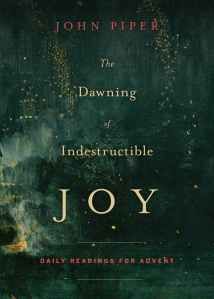
John Piper’s 25 reflections on advent entitled The Dawning of Indestructible Joy is available for free at Desiring God.

Reposted from its site:

Advent is for adoring Jesus. The Christmas season is one of the busiest times of the year. But it is also a season of reflection and preparation for that special day when we mark Immanuel’s coming — the arrival of our eternal God in our own frail humanity.

This is the greatest of history’s many wonders, something too stupendous to celebrate just on one day. Advent is a way of lengthening and intensifying the joy of Christmas.

These 25 brief devotional readings from John Piper begin on December 1 and carry us to Christmas Day. Our hope is that God would use these meditations to deepen and sweeten your adoration of Jesus and help you keep him at the center of your Christmas season.

Posted in Discipleship, Holidays | Tagged , , | Leave a comment

All-time Favorite Articles

There are a few articles that I return to repeatedly because of the unique insight they provide on difficult issues.  The links are provided below:

Which articles have you found to be the most valuable and repeatedly return to?

Posted in Uncategorized | Leave a comment

Impactful Christian Book Chapters

John Piper wrote, “It is sentences that change my life, not books.”  This may be true, but elaboration on those sentences is what really reinforces the point.  Clearly some ideas are worth dwelling over more than others, but sometimes we need more than one sentence to help them soak in and change us into the likeness of God.

This list is a work in process, but these chapters have had significant impact on me because of their distilled wisdom.  I return to them frequently to help quickly and effectively re-clarify key topics:

  • A Body of Divinity by Thomas Watson – Man’s Chief End (Chapter 1): Masterfully explains how our purpose in life is to glorify God and enjoy Him forever
  • The Death of Death by John Owen – JI Packer’s Introduction to the book: It may seem odd that an introduction to a book is so powerful, but Packer does an amazing job of distilling Owen’s argument and explaining reformed theology in a few pages
  • The Weight of Glory essay by CS Lewis: This essay is best known for the quote, “There are no ordinary people. You have never talked to a mere mortal. Nations, cultures, arts, civilizations — these are mortal, and their life is to ours as the life of a gnat. But it is immortals whom we joke with, work with, marry, snub and exploit. … Next to the Blessed Sacrament itself, your neighbor is the holiest object presented to your senses”  There are many other memorable quotes as well
  • Ordering Your Private World by Gordan MacDonald – Living as a Called Person (Chapter 5): This book isn’t a classic in its own right, but the short chapter on living as a called rather than a driven person is a helpful reorientation of our priorities
  • A Puritan Theology by Joel Beeke – The Puritan Practice of Mediation (Chapter 55): Beeke’s who section on Theology in Practice is worthy of being reread several times to ensure it’s fully absorbed, but the chapter focusing on Meditation is particularly helpful on the topic of thinking about God’s Word
  • Grounded in the Gospel by JI Packer – Three Facets of the Faith (Chapter 6): In the book and this chapter in particular, Packer lays out an argument for using catechisms for discipleship.  This chapter elaborates on a faith, hope, love framework that ties to a grounding in the Apostles’ Creed, Lord’s Prayer and Ten Commandments
  • Real Christianity by William Wilberforce – Chapter 4: Wilberforce, known for his work to eradicate slavery in Britain, covers mistaken ideas about Christianity, the desire for admiration and applause among other topics
  • The Christian Mind by Harry Blamires – Chapter 6: The author compares Christian and secular thinking and how it’s challenging to think Christianly in a world that doesn’t believe in the supernatural and eternal
  • Soul Searching by Christian Smith – God, Religion, Whatever (Chapter 4): Smith is known for introducing his influential view of Moralistic Therapeutic Deism as the primary pseudo-religion of youth today. The chapter fleshes out this idea based on a research study he help run
  • Prayer in the Night – Tend the Sick, Lord Christ (Chapter 7): Warren deals with the often brokenness of our physicality and how God uses it to draw us closer to Him
Posted in Discipleship | Leave a comment