What Christians Can Learn from Muslims

This may be a controversial statement, but Christians can learn a lot from Muslims about honoring God.  It’s sad, but true, so keep an open mind about the statement.  Although they don’t have the true God, consider the following six practices:

  • Respect for Scripture: The Quran is considered a holy book and treated as such.  It is not desecrated by putting it on the floor and it maintains its own place at a table.  It is rigorously memorized and in Islam those who know it cover-to-cover receive the highest honor.  In contrast, Christians often use the Bible as a coaster to protect our laminate countertops.  We bury it in book shelves next to drivel such as The Shack rather than giving it a place of honor.  We interpret our Scripture carelessly and flippantly with little regard for the Author’s original intent though studying the culture, genre or audience it was written to.  Bible illiteracy within the church is rampant and memorization of a few passages is a rare feat.  We no longer stand out of respect when the Bible is read in church like was the tradition 50 years ago and is seen in the Old Testament with regard to the Law (Nehemiah 8:5).
  • Scripture memorization: Memorizing the Quran is a high priority for Muslims.  Not just passages, but the whole book.  Boys will often go to a special school to focus on memory work.  This is because Islam sees the essential human condition as one of forgetfulness rather than one of depravity.  Memorizing the Quran is their way of attempting eradicate sin.  The Bible also supports hiding God’s word in our heart so that we won’t sin against Him (Psalm 119:11), but support a view that memorization is a cure for our sinful bent.  Nevertheless, we fall short of prioritizing learning about God and His will through this method.
  • Reverence toward God during prayer: When Muslims pray they humble themselves on the ground and bow their head to the floor.  Their prayers may be repetitive and ritualistic, but their posture is one of humility and submission to one greater than themselves (see Nehemiah 8:6).  How often do we even kneel before God when coming to Him in petition or praise?  Evangelicals more likely toss a pray to heaven during their drive to work or slip away into sleep which talking to the creator of the universe.
  • Consistency in prayer: Muslims pray consistency.  Once again this is a ritual, but it is also a priority for them.  We fit it in when we have time after all of our other priorities are crossed off the list.  God gets the left overs.
  • Reverence towards names: The name of Mohammed is honored in Islam with the phase ‘Peace be upon him’ after his name is said in speech or text.  They are careful to use his name appropriately.  In contrast, Christians create ‘Jesus is my boyfriend’ type songs, plaster his names on mints and other trinkets and generally disregard the commandment to not take God’s name in vain (defined as lacking substance or worth).
  • The discipline of fasting: Muslims dedicate 30 days to daylight fasting during Ramadan to learn humility and submissiveness to God.  Christians, most frequently in a Reformed tradition, fast from some food during the forty days of Lent in preparation of the celebration of Easter, but this seems to be less common as each year passes.  Beyond Lent, each individual is on his/her own and fasting does not appear to be a priority like it is for Muslims.  It is also rarely taught from the pulpit despite the examples of Moses (Exodus 38:28-29), Jesus (Matthew 4:1-4) and Paul (Acts 9:9) among other Biblical teaching on the topic (Joel 1:14, Matthew 6:16-18)

The standards of Islam are not the standards of Christianity, so we are not to be measured by them.  However, we’re to honor God in all that we do to the point of what we eat and drink.  Unlike Islam, our saved is not based on our works, but by grace through faith in Jesus’ finished work.  We’re to work out our salvation as a thank offering to Him, so we should be serious about our disciplines and reverence toward God.  God calls us to run the race to win and fight the good fight, rather than take advantage of our freedom.

In summary, consider these three questions.  Why are our spiritual practices not as consistent as reverent as the Muslims’? Are we too comfortable with seeing God as our friend and not serious about seeing Him as our Lord and honoring him as such?  As we journey into this new year, how will you change how you approach God in prayer, view of the Holy Bible, use of Jesus name and spiritual disciplines of fasting?

Also see a Summary of Muslim beliefs and What Christians Can Learn from Mormons
Posted in Culture, Discipleship | Tagged , , | 2 Comments

How to Glorify God – John MacArthur Sermon

Grace to YouAt the end of Jesus’ life He said, “I have glorified You [Father] on earth.  Now, You glorify Me with the glory that I had with You before the world began.” (John 17).  Jesus pattern in life was to glorify the Father and that should be the ultimate goal for ours too.  But how do we live out the goal of glorifying God?  In this ‘Sermon of the Week’, John MacArthur answers this question in his sermon, How to Glorify God, by saying, “[Living to glorify God] is to make every decision of life and to do every action of life with God in mind.”  His sermon then goes on to answer three questions about living for God’s glory.

  • What do we mean by God’s glory?
  • Why should we give Him glory?
  • And how do we give Him glory?

MacArthur breaks the answer to the first question into two components 1) God’s intrinsic glory.  That is the glory he has in His own nature.  2) Glory given by His creatures.  He defines this as enhancing God’s glory in the eyes of men by testifying to who He is and what He’s done.

In response to the second question, he explains that we should glorify Him because 1) God made us and everything for Himself.  2) He made us in order to give Him glory.

Lastly, how do we give God glory?  1) We are to aim our lives at glorifying God in everything (whether we eat or drink, do all to the glory of God) by sacrificing ourselves and preferring Him to all else regardless of the cost  2) We are to subject ourselves to Him as Lord.

The sermon is 52 minutes long and there’s also a transcript of you prefer to read or just want to follow along.  It’s worth every second of your time.

See also How Do We Live for God’s Glory and How To Glorify God: Four Ways

Posted in Discipleship | Tagged | 3 Comments

Best Quotes of December 2011

This gallery contains 2 photos.

Across all of the blogs and Facebook posts from December, these are the best of the best Christian quotes: Charles Spurgeon: “Every other sorrow fades over time, but sorrow over sin grows as we mature.” via Desiring God Thomas Watson: … Continue reading

More Galleries | Tagged | Leave a comment

Resolutions to Reflect Upon for the New Year – Jonathan Edwards

This gallery contains 1 photo.

In 1722 and 1723, Jonathan Edwards wrote down a list of seventy resolutions.  He was twenty-one years old and proceeded to fulfill the resolutions through a prolific career as a pastor and theologian.  This post summarizes his thinking and then groups the Edward’s … Continue reading

More Galleries | Tagged , , , , | 1 Comment

Top Blog Posts of 2011

Top blog postsThe year in review continues…As a follow-up to the top news stories and leading books of 2011, here’s a list of the top blog posts by ministry:

  • World Magazine provides their top 25 articles, which are more blog-like than news stories, so they’re included on this post.  They list anything from Tim Tebow and same-sex marriage to Pat Robertson and a one-world government
  • The Gospel Coalition’s top 10 blog articles include parenting, Rob Bell and the death of a child
  • Ligonier Ministries: Post authors include RC Sproul, Joel Beeke and Sinclair Ferguson
  • Tim Challies’ top list includes old articles that are still popular such as his review of The Shack, but also new reviews such as one about Rob Bell’s Love Wins.
  • Mark Driscoll shares his top 11 posts covering alcohol, Mormonism, Rick Warren and ‘Christian’ yoga
  • Counseling One Another provides its top 10 including how to write a sympathy card, visiting the sick, provoking children to anger and tips for memorizing scripture
Posted in News | Tagged , | Leave a comment

2011 Christian Books of the Year

The votes are in and and several different sources have selected their top books for 2011.  Three of them are listed below as you consider what to spend your time reading nexts year.

Monergism’s top 10: Monergism tends to be theology focused, so many of these books are dense.  It still worth skimming through to get ideas for reading in 2012

Christianity Today’s book awards: CT picks two or three books for a variety of categories including apologetics, history, Christian living, Biblical studies among others

Tim Challies top book list:  Challies is an uber-blogger and mega-reader, so his list is worth paying attention to.  His list covers his favorites rather than the best books, so it’s different than Monergism’s or CT’s.  It includes a book on hosptiality, public schools, biographies and marriage.

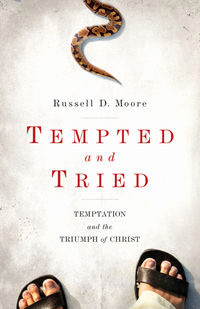
The one book that is recommended on all three lists is Tempted and Tried by Russell Moore.  Tempted and Tried is about the spiritual battle of temptation.  You can find a more detailed summary at Monergism Books.

For lists of all time book recommendations based on how long you’ve been a Christian, review the new Christian, growing Christian and mature Christian pages.  If you need ideas for parenting books, take a look at the How to Parent page.

Posted in Discipleship, News | Tagged , | 2 Comments

Christmas Video about the Birth of Jesus

Birth of JesusHere’s one last Christmas video.  This one is about the birth of Jesus and his incarnation as a baby.  It’s a couple of days after the fact, but still worth watching.

Posted in Holidays, Video | Tagged , | Leave a comment

2011 – The Year in Review

2011 Events2011 has almost come and gone.  We had a wedding,  earthquakes, a nuclear disaster, the death of at least three famous bad guys, riots, coups and a bunch of financial confusion.  What will you remember the most?  Here are some dramatic pictures to jog your memory: Year in Pictures Part 1, Year in Pictures Part 2, and Year in Pictures Part 3.  There are photo albums of Iraq, Japan’s crisis and nature at Boston.com Big Picture.

CNN’s list of top 2011 stories are listed by month.  Yahoo has several pages dedicated to the Year in Review.  The Telegraph covers the top stories for fashion, movies, music, business politics, the UK, Europe and other topics.

Christianity Today’s top ten Christian stories include Rob Bell, anti-Christian violence in Egypt, South Sudan independence and John Stott.  World Magazine has an audio review covering law, economics, sports and movies at their The World and Everything in It.  The Christian Post provides a different take with it’s top ten.

YouTube has a whole series of top 2011 videos, while Google summarized the year in this 2 minutes of major news images:

Posted in News | Tagged , , | 1 Comment

The First Christmas: The Truth and Myths of Jesus Birth

Merry Christmas!  Hopefully you’re celebrating Jesus birthday through worship at church.

ManagerSince we’re celebrating today, it might be helpful to get an accurate understanding of what the first Christmas ‘celebration’ was like.  There are many misconceptions about the birth of Jesus.  These myths were created through movies and songs that add to the information provided in the Gospels about Mary and Joseph’s journey to Bethlehem and Jesus’ birthday.  Read through this list and decide which are part of Jesus’ birth story as told by the Gospels and which aren’t.

  • The angel Gabriel appeared to Joseph to inform him that Mary was with child
  • Mary traveled to Bethlehem on a donkey
  • The Bible says that three wise men came to the manger to worship and give gifts to Jesus
  • The wise men were kings from the Orient
  • A bright star appeared in the sky and led the shepherds to the manger
  • A bright star appeared in the sky and led the wise men to the manger
  • The shepherds and the wise men were present on the night of Jesus’ birth
  • Mary, Joseph and Jesus shared space with donkeys, camels and sheep
  • An innkeeper told Mary and Joseph that there was no room in the inn, thus Jesus was born in a manger

The answer to all of the items is ‘False’ because of the items underlined do not appear in the Scriptures.  They are assumptions like the existence of the inn keeper, traveling via donkey and Gabriel’s (specifically) visit to Joseph or legends like the number of wise men (based on the number of gifts). None of them are part of the birth story as told by Matthew or Luke.  Reread the Gospel accounts yourself in Matthew 1:18-2:18 and Luke 1:26-38; 2:1-40 and note the following facts:

  1. Mary and Joseph were engaged, but not married.  They lived in the city of Nazareth in Galilee.  The angel Gabriel told Mary that she was ‘with child from the Holy Spirit’ who will be called the ‘Son of God’ (Matthew 1:18, Luke 1:26-38)
  2. An angel (we don’t know who) appeared to Joseph in a dream and told him to take Mary as his wife (rather than divorcing her) and that she will have a son named Jesus who will ‘save his people from their sins’ (Matthew 1:19-25)
  3. A registration of all people was declared by Caesar Augustus requiring Joseph and his soon to be wife Mary to travel from Nazareth to Bethlehem because Joseph was in the family of David
  4. They arrived in Bethlehem, Mary gave birth to Jesus.  She wrapped him in swaddling cloths and laid them in a manger because there was no room at the inn (Luke 2:1-7)
  5. The shepherds were in their fields in the same region and an angel of the Lord appeared to them in the glory of the Lord to announce the birth of the Savior.  The angel told the shepherds that they’d find the baby wrapped in swaddling cloths lying in a manger.  A multitude of angels appeared praising God (Luke 2:8-14)
  6. The shepherds hurried to Bethlehem to see Jesus and found Mary and Joseph along with baby Jesus in the manger.  The shepherds told them of the angels’ message.  They returned to the fields praising God (Luke 2:15-20)
  7. (Some undefined time later) ‘Wise men from the east’ come to king Herod in Jerusalem and asked where Jesus, the baby King of the Jews was.  The had seen a star and came to worship him (Matthew 2:1-2)
  8. Herod was troubled along with all of Jerusalem, so he assembled the chief priests and scribes to explain where the Christ was to be born.  They told him that He would be born in Bethlehem (Matthew 2:3-6)
  9. Herod asked the wise men back to find out when they’d seen the star and then sent them to Bethlehem to find Jesus.  He asked them to return to Jerusalem to tell him where Jesus was (Matthew 2:7-8)
  10. As the wise men set out toward Jerusalem, they saw the star again and it lead them (‘came to rest over the place’) to where Jesus was.  They went into the house and found Mary and her child, Jesus.  They worshiped Him and gave him gold, frankincense and myrrh (Matthew 2:9-11)
  11. The wise men were warned in a dream to return to their home country along a path that avoided Herod in Jerusalem (Matthew 2:10-12)
  12. On the night the wise men departed, Joseph the angel of the Lord warned Joseph in a dream to flee to Egypt.  They ran away at night and stayed in Egypt until Herod died (Matthew 2:13-15)
  13. Herod discovered that the wise men weren’t returning and had all of the male children under the age of two in Bethlehem and the surrounding region killed (Matthew 2:16-18)

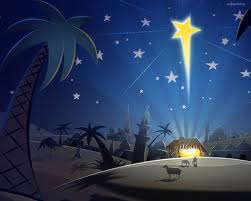
This is all of the detail that we have about the first Christmas.  Everything else has been added through extra-Biblical sources.  Just take a look at the manger images on Google to see examples of illustrations with animals, the star on the birth night along with the wise men. The birthday story itself really ends after #6 and the Bible isn’t even clear as to whether the shepherds found Jesus the same day he was born.  The wise men clearly didn’t see Jesus until some time later (possibly up to two years given Herod’s decree) because Mary and Joseph moved into a house and Jesus is described as a child rather than as a baby when the shepherds found him.  Not to ruin the classic picture any more, but one more point to note is that the Gospel stories make no mention of animals in the space where Jesus was born.

One the more positive side, some cultural background will help paint a more accurate Christmas story for you:

  • Mary was likely between 12 and 15 and Joseph 25 when they were engaged.  Engagement was the official legal bond rather than the marriage ceremony, which is why Joseph considered a divorce
  • Joseph could have Mary stoned to death (since they were legally married) as a punishment for unfaithfulness
  • They were poor as indicated by the offering of doves at Jesus presentation at the temple (Luke 2:22-24)
  • The census was likely issued in 8 BC, but did not make it to Israel until 5 BC
  • The wise men were likely from Arabia which was known for its frankincense and myrrh
  • Killing all of the children under two was within Herod’s character.  He had his favorite wife killed because he suspected that she was going to betray him

For more details on the fact and fiction of Jesus birthday see common misconceptions about Jesus birth and nativity scene misconceptions.  Jesus Through Middle Eastern Eyes by Kenneth Bailey and In the Fullness of Time by Paul Meier are good resources on this topic.  They are the source of cultural background information.

Posted in Holidays | Tagged , , , , , | Leave a comment

#1 Christmas Video: The Christmas Tale

Christmas Tale

The #1 most popular video on Follower of Jesus this Christmas season is The Christmas Tale:

Posted in Holidays | Tagged , | Leave a comment